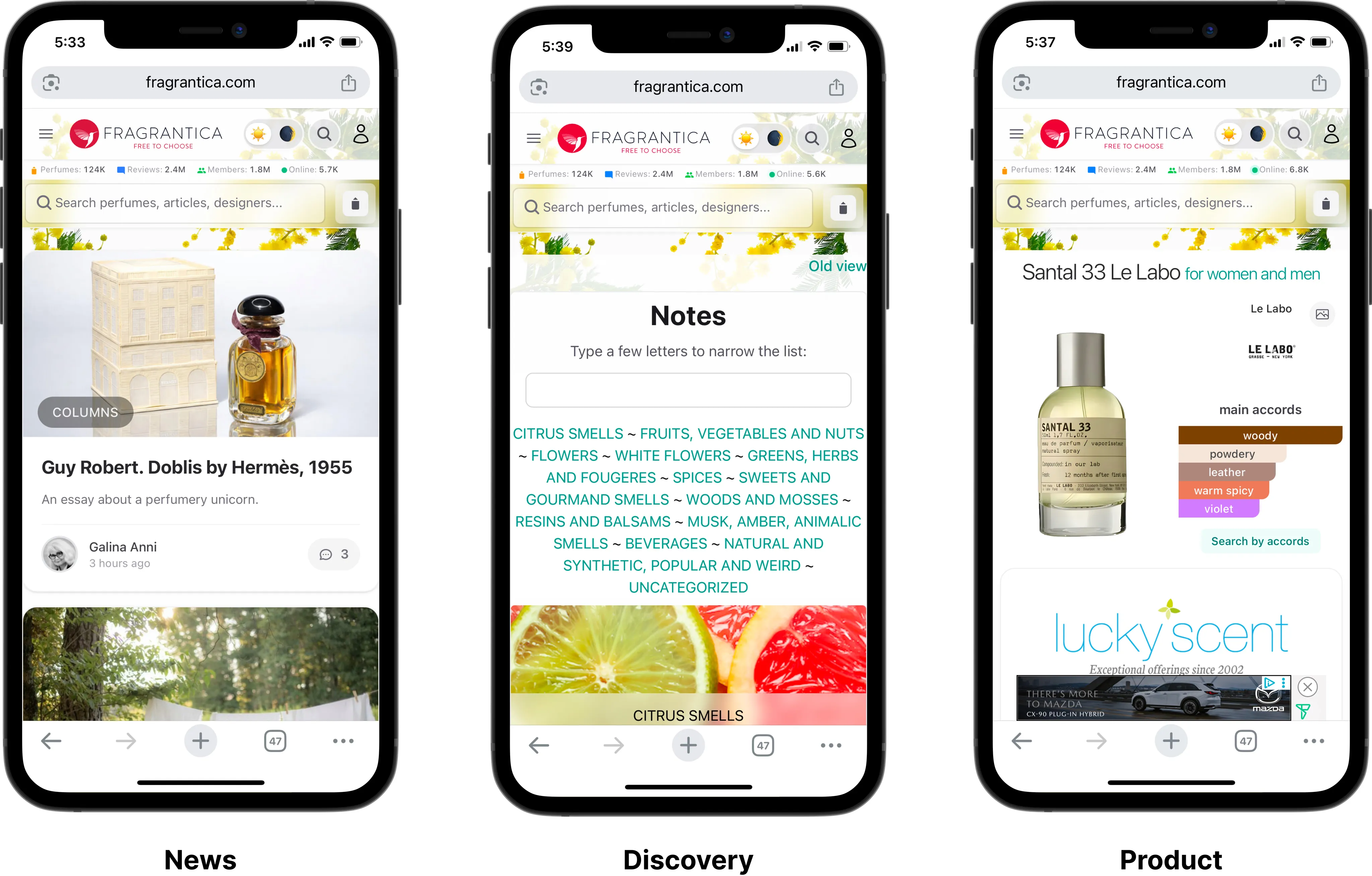
Understanding the Fragrance Decision Journey
Overview
Fragrantica currently is the most popular fragrance website today with 115k perfumes in the database a total of 1.6 million users, 2.2 million reviews, averaging 6.2k users a day.
Problem Statement
Fragrantica currently suffers from an outdated UI, giving it a redesign would enhance the features they have and create a more pleasant experience in learning and purchasing. Fragrantica currently doesn’t have a mobile APP, and lacks modern day features that would help generate more revenue.
Research Goal
To understand the current problems within Fragrantica, it was necessary to uncover the underlying behaviors and motivations of its users. Three research methods were selected a forum post was created to gather qualitative data to learn behaviours. Layered affinity mapping was used to translate these responses into behavioral patterns that could inform potential features. Finally, a competitive analysis helped identify existing product patterns and opportunities by comparing adjacent platforms.
Research Objectives
1. Data Collection
Created a forum post with targeted questions to understand how fragrance enthusiasts use Fragrantica to discover and purchase new perfumes.
2. Layered Affinity Mapping
User responses were organized into clusters of similar themes to reveal behavioral patterns and motivations. These patterns were then analyzed to uncover behavioral principles that informed potential feature opportunities.
3. Competitive Analysis
Features identified through affinity mapping were examined through a competitive analysis of adjacent apps. This helped identify existing design patterns and inform how similar features could be adapted for Fragrantica
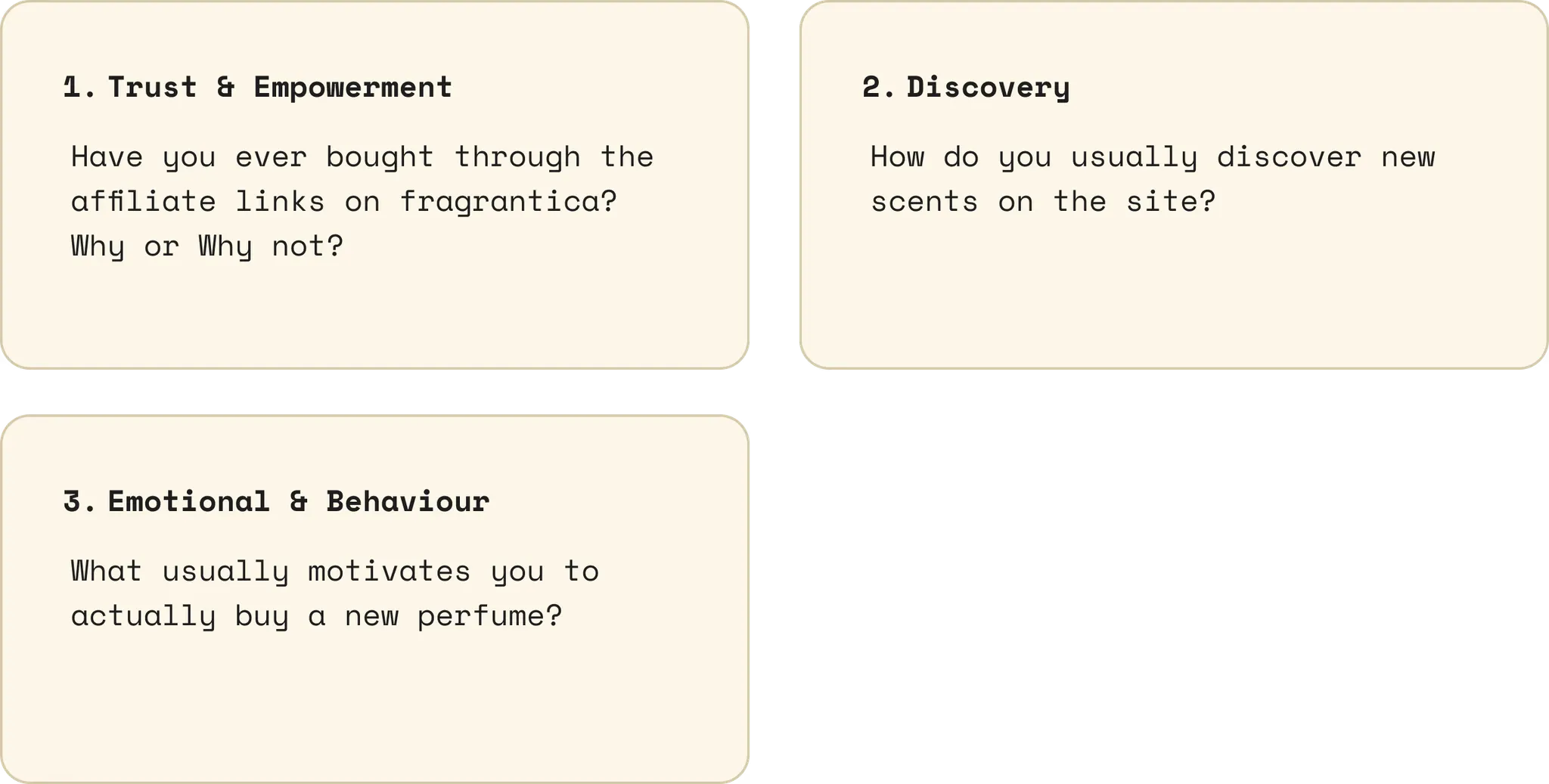
Asking the right questions
The questions were designed to challenge assumptions and better understand how fragrance enthusiasts move from discovery to purchase. By exploring themes of trust, discovery, and emotional behavior, the goal was to uncover how users navigate Fragrantica and identify opportunities to better support decision-making.
The Answers
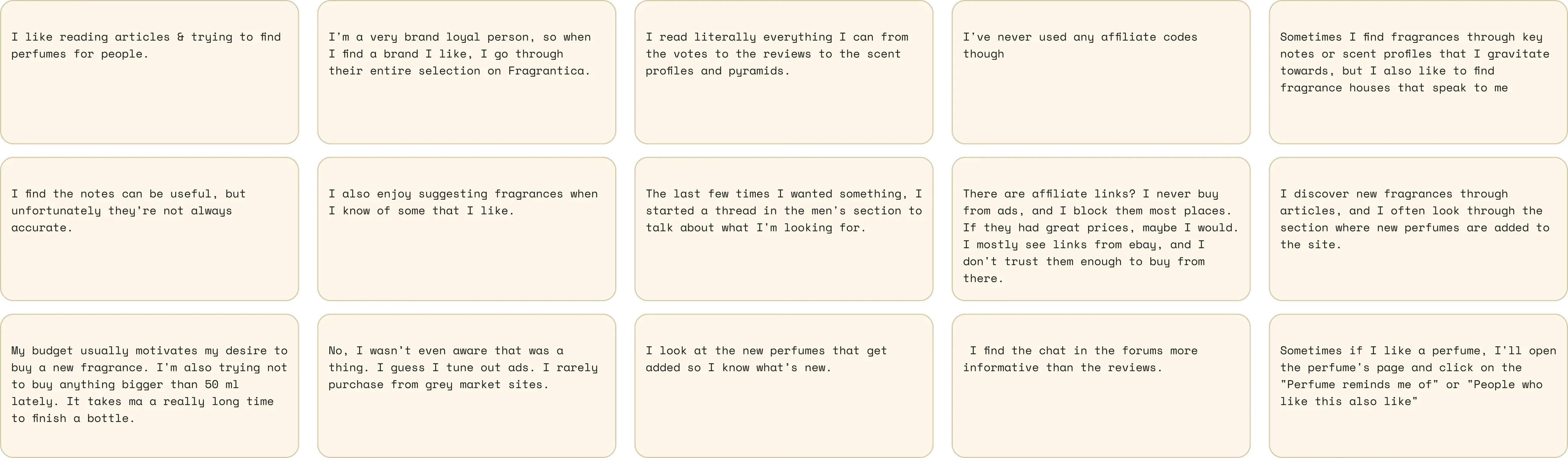
The responses revealed insights into how users approach fragrance discovery and purchasing on Fragrantica. While many users follow similar patterns when discovering new fragrances, purchasing behaviors vary significantly. These insights helped identify where the experience could be improved to better support decision-making.
User Behavior Shaped the Experience
The responses revealed insights into how users approach fragrance discovery and purchasing on Fragrantica. While many users follow similar patterns when discovering new fragrances, purchasing behaviors vary significantly. These insights helped identify where the experience could be improved to better support decision-making.

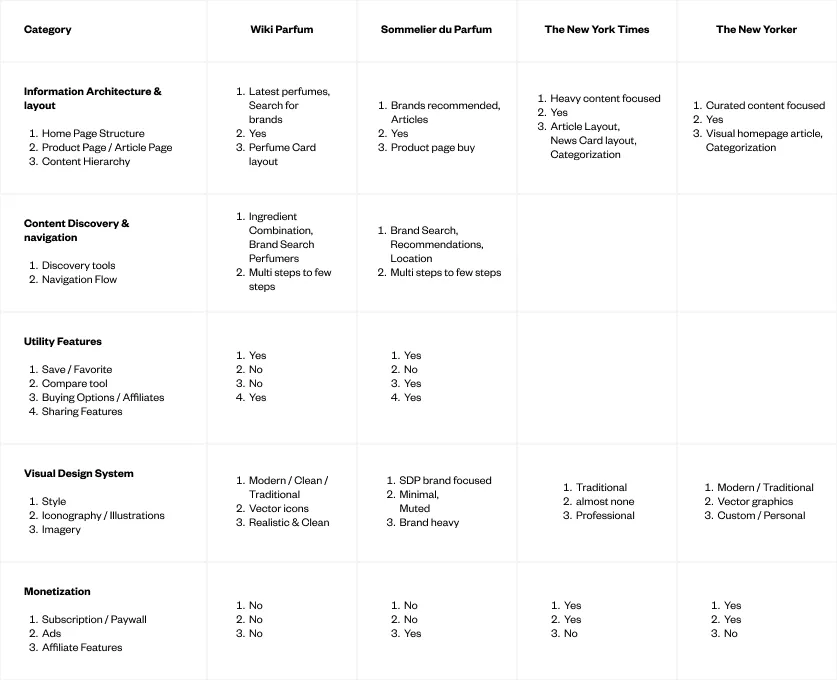
Competitive Analysis
Apps with similar discovery and product evaluation experiences were reviewed to understand how they structure key interactions. The analysis focused on identifying proven design patterns that support browsing, comparison, and purchasing decisions. These patterns helped inform how similar features could be integrated into Fragrantica’s interface.
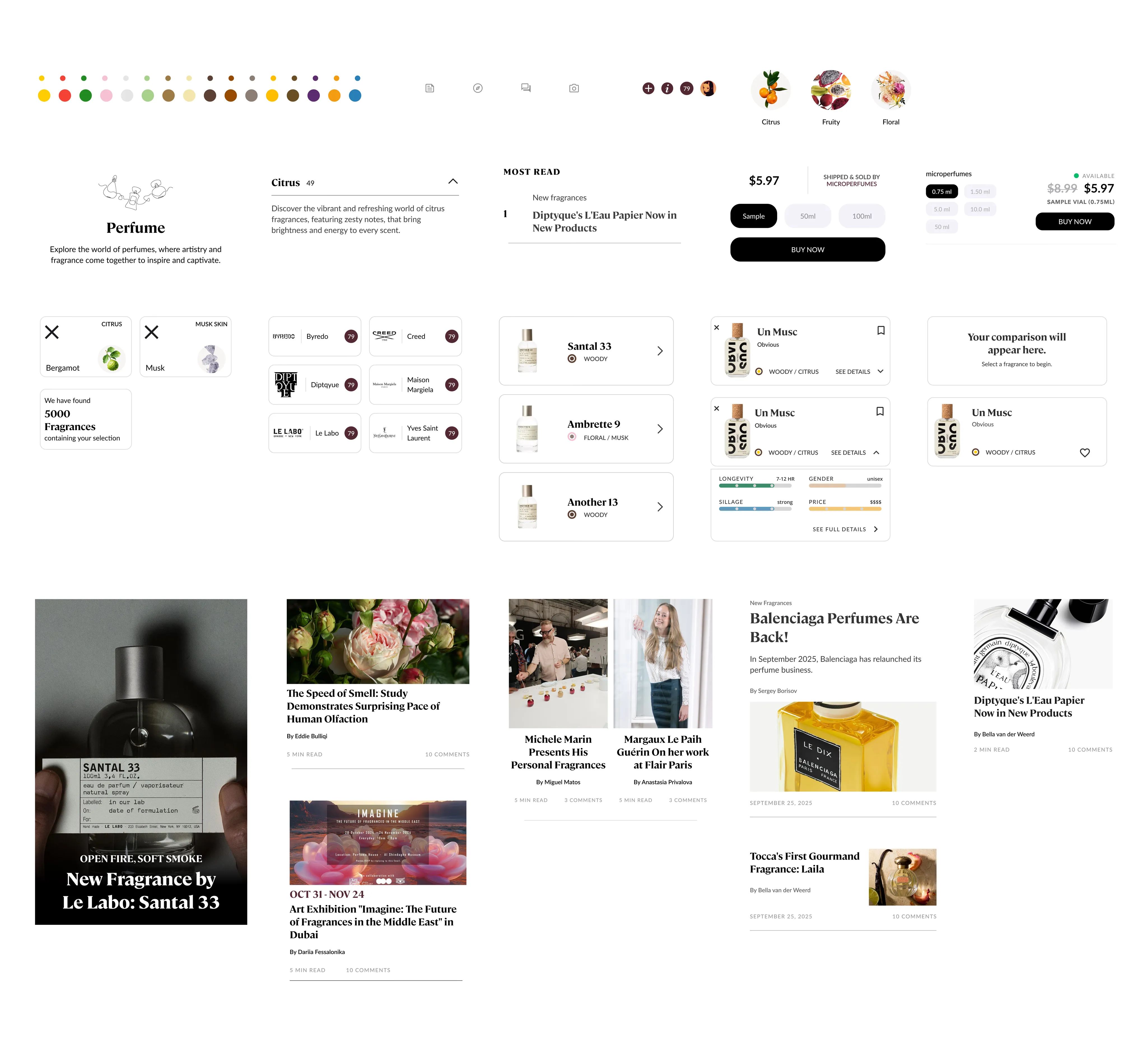
Design System
The redesign introduces a simplified visual system to ensure consistency across the interface. Typography, spacing, icons, and core components were standardized to create clear visual hierarchy and reduce cognitive effort when navigating content. This foundation helps users scan information quickly while maintaining a cohesive experience across articles, fragrance cards, and product pages.
Bridging Content and Product Discovery
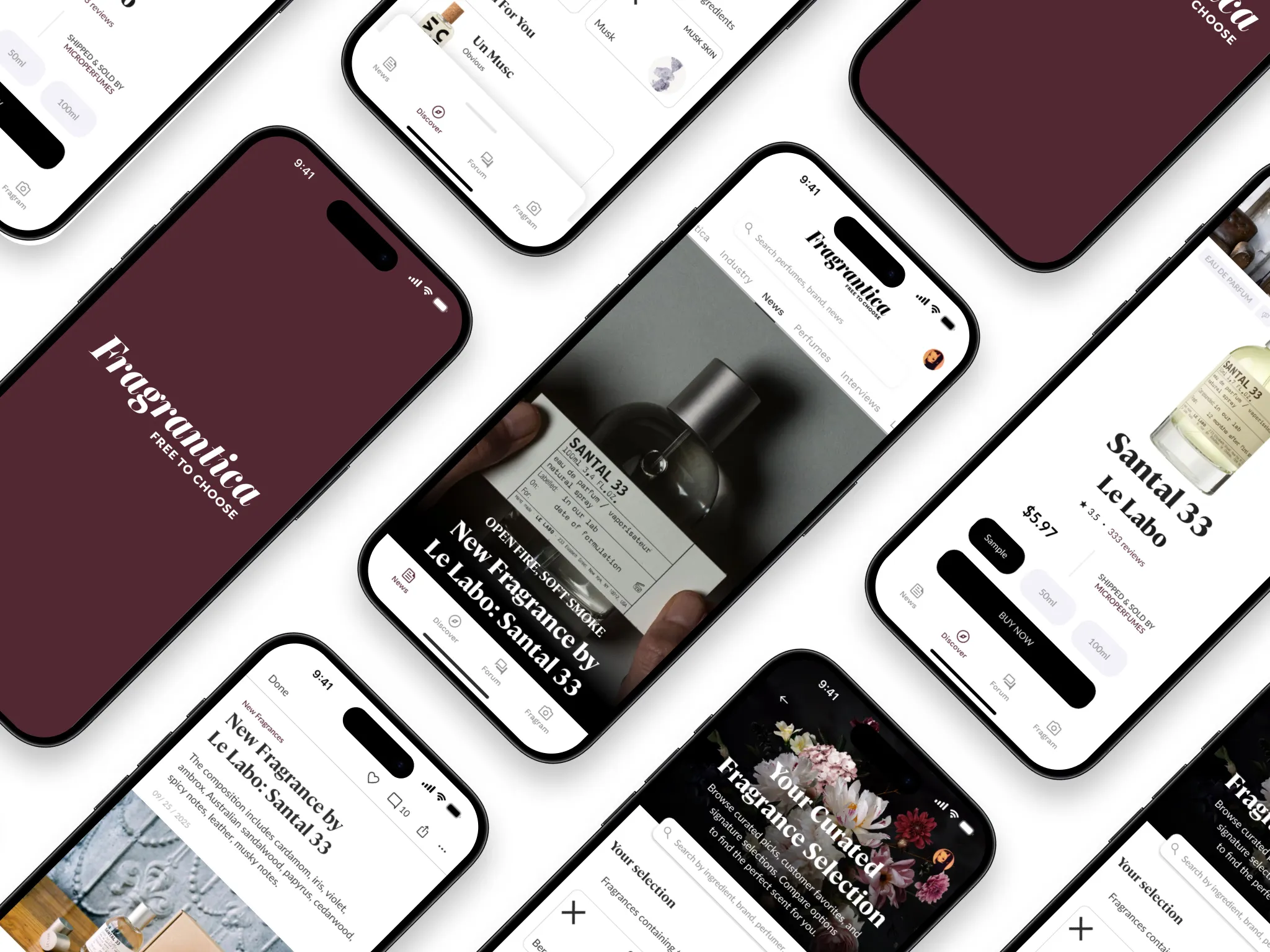
The news experience was redesigned to guide users from reading an article to exploring the featured fragrance and ultimately reaching the product page. The layout creates a clear path from content to product, reducing friction and helping users transition naturally from discovery to action without needing to search or interpret ambiguous links.
Establishing a Clear Entry Point
Presenting one prominent article at the top establishes a clear place to begin. This removes the need to scan multiple headlines and helps users engage immediately with the most relevant content.
Direct Path to the Featured Fragrance
A clearly labeled button links the article to its associated product page. Using a familiar button pattern makes the action obvious and reduces uncertainty about how to view the fragrance being discussed.
Ingredient-Led Fragrance Discovery
The product page reframes affiliate links into a familiar retail purchase experience. By adopting established e-commerce pattern clear pricing, structured size selection, and visible retailer attribution the interface increases purchase confidence and reduces the perception of promotional bias.
Making Search Results Feel Personal and Controllable
After choosing an ingredient, users see fragrances that match their selection along with the option to refine further through suggested combinations. Keeping the chosen ingredients visible reinforces a sense of progress, while showing how many results were found provides immediate feedback. This makes the experience feel exploratory rather than uncertain, allowing users to adjust their preferences without losing direction.
Enabling Quick Side-by-Side Decisions
Multiple fragrances can be gathered and compared side-by-side before visiting a product page. Seeing options together reduces mental effort and helps users evaluate differences quickly, while curated recommendations maintain momentum and prevent decision fatigue.
Redesigning the Point of Conversion
The product page reframes affiliate links into a familiar retail purchase experience. By adopting established e-commerce pattern clear pricing, structured size selection, and visible retailer attribution, the interface increases purchase confidence and reduces the perception of promotional bias.
Lowering the Barrier to Purchase
Introducing multiple bottle sizes, including samples, lowers the barrier to entry and supports incremental commitment. Users can try the fragrance at a lower cost before purchasing a full-size bottle, reducing perceived risk at the moment of decision.
Expanding Retailer Comparison in Context
The “Available at” panel expands to reveal additional retailers and pricing options without disrupting the primary layout. By centralizing comparison within the product page, users can evaluate alternatives instantly, reducing cross-app search behavior and increasing the likelihood of completing their purchase within the affiliate ecosystem.
Focus & Future Opportunities
Identifying a small number of high-impact opportunities helped maintain clarity throughout the project. The redesign focuses primarily on discovery, evaluation, and purchase decision stages, where the greatest influence on user behavior occurs. Future work could explore post-purchase engagement, reviews, and long-term retention to create a more complete end-to-end experience.